Dirt Road: The Hand-Drawn Rustic Font for Authentic Projects
A Typeface with Rustic Character
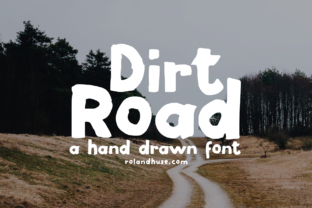
There’s a certain warmth in hand-drawn lettering that digital precision can’t quite replicate. Dirt Road captures that feeling—a premium font with the personality of a well-worn path through open countryside. It’s not trying to be sleek or minimalist. Instead, it leans into its roots with rough edges, uneven baselines, and a texture that feels genuinely handmade. This is a display font that works best when given room to breathe, especially in larger sizes where its details truly shine.
Visually, Dirt Road straddles the line between a rustic serif font and a playful handwritten font. The letterforms have weight and presence without feeling heavy. There’s a slight unevenness to the strokes—some thicker, some thinner—that mimics the look of ink on rough paper or paint on weathered wood. It doesn’t have the tight kerning of modern typography; instead, each character feels like it was placed by hand, which gives it an organic, approachable quality.
What sets Dirt Road apart from other creative fonts is its versatility in tone. It can feel whimsical and kid-friendly when paired with bright colors and playful illustrations, but it also carries a rugged authenticity that suits outdoor brands, artisan products, and vintage-inspired design. It’s the kind of typeface that tells a story before you even read the words.
Where Dirt Road Truly Comes Alive
This font finds its stride in projects where personality matters more than polish. Think about poster design—a concert flyer for a folk festival, a farmer’s market announcement, or a children’s book cover. Dirt Road commands attention in these contexts because it doesn’t look like everything else on the page. It stands out against the clean sans serif fonts and geometric logos that dominate most visual spaces today.
For brand identity work, Dirt Road offers something specific: an immediate signal of authenticity. Small businesses selling handmade goods, organic products, or outdoor gear often struggle to communicate their values through typography alone. A font like Dirt Road does that work naturally. It says, “This was made with care,” without a single word of copy. I’ve seen it used effectively on craft brewery labels, farm-to-table restaurant menus, and boutique soap packaging—contexts where the rustic aesthetic aligns perfectly with the product story.
It also works surprisingly well in digital spaces. Social media graphics for lifestyle brands, blog headers for outdoor or parenting niches, and even email newsletter titles can benefit from its warmth. The key is restraint. Dirt Road isn’t a body text font; it’s a headline font, a title font, an accent font. Use it where you want a human touch, then pair it with something cleaner for longer passages.
Practical Applications Worth Considering
- Kids-themed projects: Birthday invitations, classroom posters, children’s activity books, and toy packaging all benefit from its playful, approachable feel.
- Editorial design: Magazine feature headers, chapter titles in books, and zine layouts can use Dirt Road to create visual interest and set a specific mood.
- Packaging design: Food products, candles, artisan crafts, and small-batch goods look great with hand-drawn typography that suggests care and craftsmanship.
- Web design: Hero section headlines, landing page titles, and call-to-action banners can use this display font to add personality without sacrificing usability—when paired with a clean sans serif font for body copy.
- Event materials: Wedding signage, festival programs, workshop flyers, and community event posters all benefit from its warm, handcrafted look.
How Dirt Road Shapes Perception and Engagement
Typography influences how people feel about what they’re reading, often before they process the actual content. Dirt Road leans into warmth, nostalgia, and approachability. When someone sees this font on a product label or website header, they’re likely to perceive the brand as friendly, genuine, and unpretentious. That’s valuable positioning for businesses that compete on authenticity rather than luxury or innovation.
Visual hierarchy is another area where this font earns its place. Because Dirt Road has such a distinct personality, it naturally creates contrast when set against simpler typefaces. A headline in Dirt Road followed by a paragraph in a clean serif font or a neutral sans serif font creates an immediate sense of structure. The reader’s eye is drawn to the hand-drawn element first, then flows naturally into supporting text. This kind of hierarchy is especially useful in editorial design and web design, where guiding the reader’s attention matters.
Brand recognition also benefits from distinctive typography. Companies that use the same creative font consistently across their packaging, website, social media graphics, and print materials build a visual shorthand that audiences learn to associate with them. Dirt Road works well for this purpose because it’s memorable without being distracting. It has enough character to be recognizable, but not so much that it overwhelms other design elements.
Working with Dirt Road in Your Projects
Before committing to any font, it’s worth testing it in context. Dirt Road looks different at 72 points on a poster than it does at 36 points on a business card. Print a sample, view it on screen at actual size, and check how it reads in the specific environment where it will live. Some hand-drawn fonts lose clarity at smaller sizes—Dirt Road is no exception. Its texture and irregular edges are strengths at large sizes but can become a liability in tight spaces or small text.
Font pairing is where many designers either unlock a font’s potential or undermine it. Dirt Road pairs well with neutral, well-spaced typefaces. A geometric sans serif font like Montserrat or a classic serif font like Georgia can provide the balance needed to keep a layout readable. Avoid pairing it with other decorative or script fonts; competing personalities create visual noise rather than harmony.
Check what’s included with the font before you start. Some premium fonts come with multiple weights, alternates, ligatures, or language support that expand your options. Dirt Road may include stylistic variations that let you fine-tune the look—swapped letterforms, for instance, that change the rhythm of a word. These details matter when you’re working on logo design or headline treatments where every character is visible.
Finally, verify the licensing. If you’re using Dirt Road for commercial work—client projects, products for sale, or business marketing—make sure the license covers that use. Most reputable font foundries offer clear commercial licensing terms, but it’s always worth confirming before a project goes to print or goes live online.
When Dirt Road Isn’t the Right Fit
No font works for every project. Dirt Road probably isn’t the right choice for a law firm’s brand identity, a fintech startup’s app interface, or a luxury fashion label’s lookbook. Its personality is too strong for contexts that demand neutrality, formality, or minimalism. Knowing when not to use a font is just as important as knowing when to use it. The best typography decisions are the ones that serve the project’s goals—not the designer’s personal taste.
That said, if your project calls for warmth, authenticity, and a handcrafted feel, Dirt Road is worth serious consideration. It’s a design asset that does real work, not just decoration. Used thoughtfully, it can elevate a brand, engage an audience, and make a project feel genuinely human.