Digital Clock: The Typeface of Instant Clarity
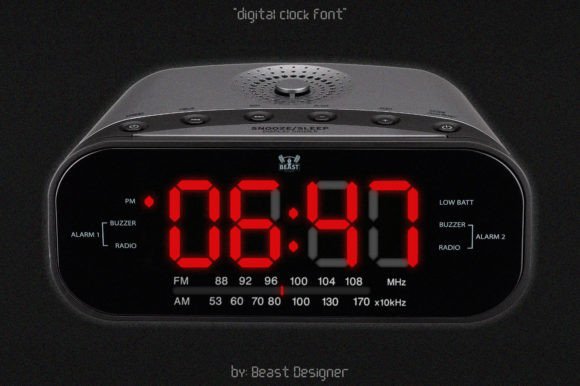
You know that feeling when you glance at a microwave display, an alarm clock on a nightstand, or a scoreboard in a stadium? You don't "read" the time; you absorb it instantly. That immediate, frictionless comprehension is exactly what the Digital Clock font captures. It isn't just a collection of numbers; it is a typeface engineered for urgency and precision. Designed to mimic the segmented look of classic LED and LCD displays, this font strips away the decorative serifs and flowing lines of traditional typography in favor of geometric clarity. It is the visual language of modern timekeeping, offering a distinct, retro-futuristic aesthetic that feels both familiar and technically precise.
The Anatomy of the Display
What makes Digital Clock so recognizable? It comes down to the construction. Unlike a standard sans serif font where a letter "O" is a perfect circle, the "0" in a digital typeface often features a diagonal slash or a distinct inner rectangle, mimicking seven-segment LCD technology. The design is characterized by uniform stroke widths and open apertures—those gaps in letters like 'C' or 'E' that allow light to pass through. This isn't just stylistic; it is functional. The modern typography here prioritizes x-height, meaning the lowercase letters are tall and capacious, ensuring that whether the text is 12 pixels high on a mobile app or blown up on a billboard, the data remains legible.
Visually, the personality of this typeface is authoritative yet accessible. It tells the viewer, "This is important data." It lacks the whimsy of a handwritten font or the gravitas of a heavy serif font. Instead, it sits firmly in the realm of utility-chic. For the designer, this offers a unique opportunity to inject a technical, "hacker," or retro vibe into a project without sacrificing readability. It is a display font at heart, meaning it shines brightest in headlines, logos, and call-outs rather than in long-form body text.
Strategic Applications: Beyond the Clock Face
If you limit Digital Clock to literal time displays, you are missing out on its branding potential. This typeface has a powerful ability to set a mood. For entrepreneurs and brand identity strategists, consider where a touch of "tech" or "precision" is needed.
- Tech Startups and Apps: If you are launching a productivity tool, a fitness tracker, or a fintech app, using Digital Clock in your logo design or user interface headers reinforces the concept of efficiency and data management.
- Event and Entertainment Branding: Think about music festivals, gaming tournaments, or escape rooms. This font instantly evokes a sense of countdown, adrenaline, and high-stakes action. It works incredibly well on posters, wristbands, and social media graphics.
- Editorial and Packaging Design: In editorial design, particularly for magazines covering science fiction, motorsport, or technology, Digital Clock serves as a dynamic headline font. For packaging design, imagine a coffee brand marketed for "night owls" or an energy drink; the segmented numerals suggest alertness and energy.
- Creative Hobbyists: For crafters making scrapbook layouts or printable wall art, this font adds a graphic punch that softer script fonts cannot achieve. It pairs surprisingly well with minimalist, line-art illustrations.
Mastering the Pairing and Hierarchy
One of the most common mistakes with a creative font like Digital Clock is overuse. Because it is so distinct, using it for an entire paragraph can create a headache for the reader. The key to visual hierarchy is contrast.
When designing a layout, treat Digital Clock as the "shout" and pair it with a "whisper." A clean, geometric sans serif font (like Helvetica, Roboto, or Open Sans) makes an excellent companion for body copy. The geometric nature of the sans serif echoes the structure of the digital font but remains neutral enough for reading. Alternatively, for a high-fashion or editorial look, try pairing it with a sharp, high-contrast serif font. The clash between the classic serifs and the mechanical digital segments creates a sophisticated tension that looks expensive and curated.
When testing your font pairing, pay attention to the weight. Digital Clock often appears visually heavier than a standard medium-weight typeface due to its blocky construction. You may need to lighten the weight of your body text or increase the line height to ensure the layout breathes.
Practical Evaluation and Licensing
Before you integrate this typeface into your next project, a practical checklist is necessary. First, evaluate the specific "cut" of the font. Some versions of Digital Clock are strictly numerical, while others include a full alphanumeric set. If you are designing a logo that requires letters, ensure your chosen premium font includes the full character map.
Second, test for readability at various sizes. While it excels at large sizes, zoom out to mobile dimensions. Do the negative spaces inside the numbers close up? If the "8" starts looking like a "B," you have a legibility issue.
Finally, understand the licensing. If you are using this for a client's web design or a commercial product run, you need a commercial font license. Most design assets marketplaces distinguish between desktop licenses (for print/logos) and web licenses (for CSS implementation). Ensure your license covers your specific deployment method to avoid legal headaches down the road.
Ultimately, Digital Clock is more than just a novelty. It is a functional typeface that communicates precision, modernity, and immediacy. Used wisely, it can transform a standard design into something that feels current, connected, and impossible to ignore.