Amnesty: A Rustic Typeface with Modern Edge
There’s a certain kind of energy that jumps off the page when you see a font that isn’t trying to be perfect. It’s the slight wobble in a line, the uneven texture of a stamp, the raw feel of something drawn by a human hand. This is the core of the Amnesty font family. It’s not a sterile, geometric premium font designed in a vacuum. It’s a handwritten font with a rustic soul, yet it carries a surprisingly modern typography sensibility. For designers, marketers, and creators looking for a creative font that feels authentic and full of spirit, Amnesty offers a compelling blend of passion and practicality.
Visual Character: Where Rustic Charm Meets Contemporary Design
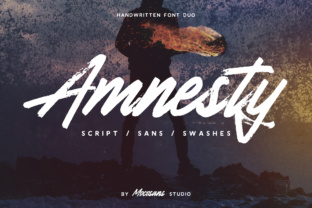
At its heart, Amnesty is an expressive display font. It’s not meant for body text in a novel, but for headlines, logos, and moments where you need to inject personality. The main typeface has a dynamic, hand-lettered quality. You can see the influence of a brush or pen in its strokes—it’s fluid and energetic, but not messy. This makes it a versatile tool for a wide array of projects, from logo design for an artisan brand to social media graphics for a lifestyle blogger.
The true strength of the family, however, lies in its pairing with Amnesty Sans. This sans serif font companion is a workhorse. It provides a clean, stable foundation that grounds the more expressive handwritten style. The inclusion of two variations—Regular and Stamp—is a particularly thoughtful touch. The Regular is crisp and versatile for digital and print layouts. The Stamp version adds a worn, textured effect, perfect for projects aiming for a vintage, craft, or industrial aesthetic. This combination transforms Amnesty from a single script font into a complete design asset system for building a cohesive visual language.
Practical Applications: From Brand Identity to Packaging Design
Knowing a font looks good is one thing. Knowing where to use it effectively is another. Amnesty’s personality makes it a natural fit for certain niches. Think about brand identity for a coffee roaster, a boutique brewery, a farm-to-table restaurant, or an outdoor adventure company. The rustic vibe communicates authenticity, craftsmanship, and a connection to tradition. In packaging design, it can make a product feel handmade and premium, standing out on a shelf crowded with generic, clean-line labels.
Beyond physical products, its digital applications are just as strong. For web design, Amnesty can create striking hero sections or call-to-action buttons that feel personal and urgent. In editorial design, like magazine spreads or blog post headers, it adds a layer of visual interest and sets a specific tone. It’s also excellent for social media graphics where stopping the scroll is paramount—a bold headline in Amnesty can cut through the noise with its unique character.
A Designer's Guide to Using Amnesty Effectively
Choosing a commercial font like Amnesty is an investment. To get the most out of it, consider these practical steps:
- Evaluate Project Fit: Does your project’s personality align with Amnesty’s? It thrives in contexts that value authenticity, energy, and a human touch. A corporate law firm’s annual report might not be the right home, but a new app for creatives could be perfect.
- Master the Font Pairing: Use the included Amnesty Sans strategically. Let the handwritten style be the star for headlines and key phrases. Use the sans for subheadings, pull quotes, or body text to ensure readability and create clear visual hierarchy. The Regular and Stamp variations offer even more control over texture and tone.
- Prioritize Readability: Even with a display font, legibility is key. Test your layouts at the size they’ll be viewed. A headline on a billboard has different needs than a logo on a business card. Ensure there’s enough contrast with the background and that the letterforms don’t blur together at smaller sizes.
- Understand the License: Always review the licensing terms of any font duo you purchase. Ensure it covers your intended use, whether for a client’s commercial website, a series of printed posters, or a personal project. This is a fundamental part of professional practice.
Ultimately, a font like Amnesty is more than just a collection of letters. It’s a tool for storytelling. It can influence brand perception by signaling that a brand is approachable, spirited, and values a personal connection. It can improve audience engagement by breaking the monotony of standard serif font and sans serif layouts. When used thoughtfully, it becomes a key component of visual hierarchy, guiding the viewer’s eye and emphasizing what matters most. For any creative professional building a toolkit of reliable, expressive assets, the Amnesty family is a serious contender that delivers both style and substance.