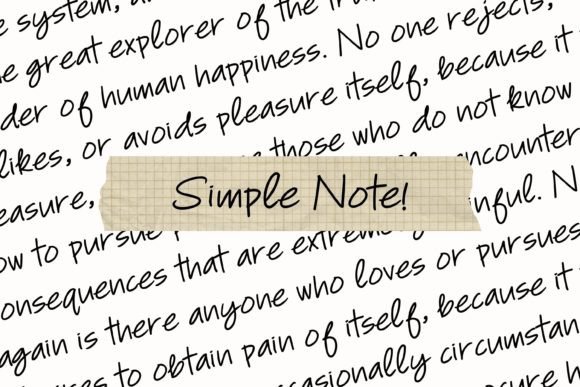
Simple Note: The Authentic Handwriting Font for Real-World Projects
Finding a font that genuinely feels human can be a challenge. Many handwritten fonts look overly stylized or cartoonish, which limits their usefulness. Simple Note takes a different approach. It’s a casual handwriting typeface designed to mimic natural pen strokes, offering an authentic and approachable feel without sacrificing clarity. This isn't about mimicking perfect calligraphy; it's about capturing the relaxed, slightly imperfect character of real handwriting. The result is a versatile creative font that works across a surprising range of applications, from personal notes to professional branding.
The Visual Character: More Than Just Cursive
At first glance, Simple Note presents a clean, legible script. Its strokes have a natural variation in thickness, replicating the pressure of a felt-tip pen or a soft pencil. This gives it a warm, organic texture that feels inviting and personal. Unlike many script fonts, it avoids excessive flourishes or connections that can hinder readability, especially at smaller sizes. The letterforms maintain a consistent baseline, providing structure while preserving a casual, handwritten rhythm.
The personality of Simple Note is friendly, approachable, and slightly informal. It doesn’t shout for attention like a bold display font might. Instead, it communicates authenticity and warmth. This makes it an excellent choice for projects where building a personal connection with the audience is key. Think of it as the typographic equivalent of a friendly, handwritten note left on a colleague's desk or a personal message in a birthday card.
Practical Applications: Where Simple Note Truly Shines
The strength of Simple Note lies in its adaptability. It’s a true workhorse for creators who need a touch of humanity in their designs. Here’s where it excels:
- Branding & Logo Design: For small businesses, artisan brands, or personal blogs, Simple Note can form the core of a warm, approachable brand identity. It works beautifully for logos, taglines, and brand messaging that aim to feel personal rather than corporate.
- Marketing & Social Media: In the crowded space of social media, a handwritten font can help your graphics stand out. Use Simple Note for Instagram quotes, Facebook post headlines, Pinterest pins, or email newsletter subject lines to add a human touch that boosts engagement.
- Packaging & Product Design: On product labels, especially for food items, cosmetics, or handmade goods, this font communicates care and authenticity. It’s perfect for product names, short descriptions, or ingredient lists where a personal, crafted feel is desirable.
- Editorial & Publishing: While not for body text, Simple Note is ideal for pull quotes, chapter titles, blog post headers, or magazine sidebars. It adds visual interest and breaks up the monotony of standard serif or sans serif typography.
- Digital & Web Design: Used sparingly, it can enhance user experience. Think of call-to-action buttons, testimonial quotes on a website, or annotations in a UI mockup. It adds a layer of personality to digital interfaces.
- Personal Projects & Crafting: This is where it feels most at home. Use it for wedding invitations, greeting cards, scrapbooking, journaling, or any DIY project where you want the look of handwriting without the inconsistency.
Making It Work: Font Pairing and Readability
A premium font like Simple Note reaches its full potential when used thoughtfully. Its casual nature means it pairs best with clean, neutral typefaces. A classic sans serif font like Helvetica, Arial, or a modern geometric sans creates a beautiful contrast, allowing the handwritten element to be the star without overwhelming the design. Similarly, pairing it with a simple, readable serif font like Georgia or Times New Roman can yield elegant results for more traditional layouts.
Readability is paramount. While Simple Note is clearer than many alternatives, it’s still a handwritten font. Avoid using it for long paragraphs of body text. Its ideal role is for headlines, subheadings, short quotes, labels, and other display elements where its character can be appreciated at a glance. Always test your design at the intended viewing size—what looks charming on a business card might become illegible on a distant billboard.
When evaluating if it’s the right fit for your project, consider the audience and message. Is your goal to convey professionalism and authority? A more traditional typeface might be better. Is your goal to feel friendly, personal, creative, or approachable? Simple Note is likely a strong candidate. Review the included styles and character sets. Many commercial fonts include multiple weights, alternates, or ligatures that expand your creative options.
Finally, always check the licensing. If you’re using Simple Note for a client project, a product for sale, or widespread marketing, ensure you have the appropriate commercial license. This protects you legally and supports the font designer’s work. A legitimate design asset is worth the investment for the professionalism and peace of mind it provides.
In a digital world saturated with perfect, vector-based graphics, the intentional use of a handwritten font like Simple Note can be a strategic advantage. It injects warmth, personality, and a human touch that resonates with audiences. By understanding its visual strengths and applying it with purpose, you can leverage this typeface to create more engaging, memorable, and effective designs across all your creative endeavors.