Scribble Kidsy: A Playful Type for Joyful Designs
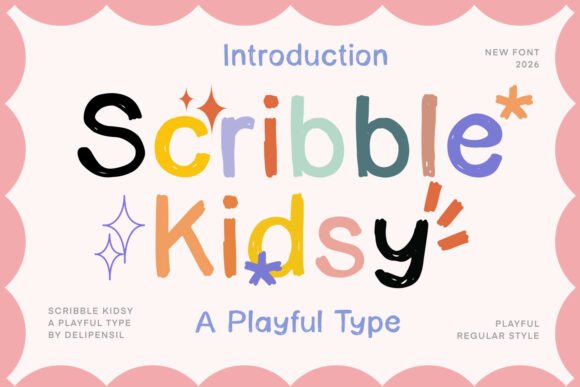
You know that feeling when a child hands you a drawing, all proud and beaming? That unfiltered joy, the energetic lines, the complete lack of self-consciousness—that’s the spirit captured in the Scribble Kidsy typeface. It’s more than just a playful font; it’s a design tool built to inject a specific, authentic kind of warmth into your projects. As a designer, I’m always looking for assets that solve a problem, and this one addresses the need for typography that feels human, approachable, and genuinely fun without crossing into unprofessional territory.
What sets Scribble Kidsy apart from other handwritten fonts is its intentional irregularity. The letterforms aren’t perfect, and that’s the point. They mimic the organic, slightly uneven pressure of a marker or crayon, giving the text a rhythmic, "scribbled" texture. The rounded terminals and bouncy baseline create a natural sense of movement on the page. This isn’t a static display font; it has personality. It feels like it was drawn just for your headline, making it an excellent choice for logo design where you need instant character, or for children's book titles that need to spark curiosity before the cover is even opened.
Finding the Perfect Fit for Your Project
The real test of a premium font isn’t how it looks in a specimen sheet, but how it performs in the wild. Scribble Kidsy excels in environments where you want to break down barriers between a brand and its audience. If you’re working on nursery decor, social media graphics, or packaging design for youth-oriented products, this typeface bridges the gap between professional brand identity and playful accessibility. It’s the kind of creative font that makes a parent smile or a teacher feel welcomed.
However, context is everything in modern typography. You wouldn’t use a bold script for body copy, and the same applies here. Scribble Kidsy is a headline hero. It demands attention in short bursts. For a blog header or a poster, it’s fantastic. For a 500-word paragraph, it would be exhausting to read. I often recommend pairing it with a clean, geometric sans serif font for body text. This contrast allows the energy of the scribble to stand out while ensuring your message remains legible and grounded. If you are designing an invitation or a t-shirt, the font stands alone beautifully, but for a full brand identity system, you need that typographic hierarchy.
Practical Considerations for Designers and Creators
When you integrate a new asset like this into your toolkit, you need to think about the mechanics. First, let’s talk font pairing. Because Scribble Kidsy has a high "x-height" and a lot of texture, it pairs surprisingly well with blocky, sans-serif fonts like Montserrat or even a sturdy serif font for a more eclectic, modern editorial look. The goal is to let the headers do the heavy lifting emotionally while the supporting text does the work informatively.
As a commercial font, licensing is a critical checkpoint. Whether you are a crafter selling digital downloads on Etsy or a marketing agency creating assets for a client, you need to ensure your license covers your specific usage. Always review the End User License Agreement (EULA) regarding embedding fonts in apps or using them on merchandise. Scribble Kidsy is a valuable piece of design assets inventory, so treating it with professional respect regarding licensing keeps your business safe.
Testing and Evaluation
Before you commit to a design, put the typeface through its paces. Type out your specific headline. Does the "W" look too wide? Does the "e" connect awkwardly with the "r"? With a font like this, the ligatures and alternates matter. Check if the playful type includes multiple styles—perhaps a bold version for extra punch or a lighter weight for subheadings. Test it on a mobile screen; sometimes, intricate textures can get muddy at small sizes in web design. If the texture disappears, it loses its charm and might just look like a blurry sans serif font.
Ultimately, Scribble Kidsy is about injecting humanity into digital spaces. It’s a reminder that design doesn’t always have to be rigid or corporate. For entrepreneurs, bloggers, and content creators, it offers a way to stand out in a sea of generic system fonts. It tells your audience, "We are here to have fun, but we care about the details." It’s a tool for storytelling, turning a simple piece of editorial design or a social post into something that feels handcrafted and intentional.