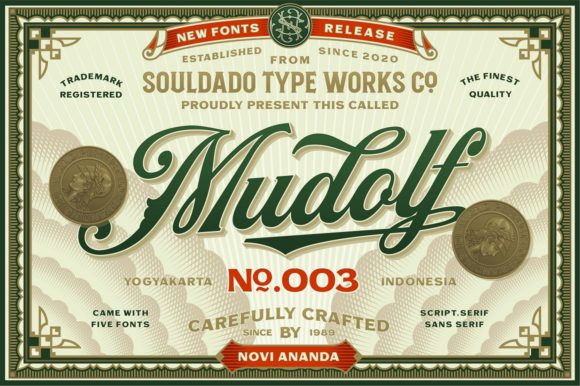
Mudolf: A Playfully Nostalgic Font with Vintage Charm
There’s something magnetic about a typeface that doesn’t just sit on the page but tells a story. Mudolf is exactly that kind of creative font. It feels like uncovering a beautifully preserved vintage postcard or the hand-lettered sign of a classic boutique. This isn’t a sterile, modern display font; it’s a premium font with personality, designed to evoke warmth, nostalgia, and a touch of whimsical elegance. For designers, entrepreneurs, and creators seeking to inject genuine character into their projects, Mudolf offers a compelling solution.
Understanding the Visual Soul of Mudolf
At its core, Mudolf is a serif font, but it defies the rigid expectations of traditional serif typography. Its letters feature gorgeous swashes and thoughtful ligatures that are the heart of its appeal. These aren't just decorative afterthoughts; they are integral to the font's flow, creating connections between characters that mimic the natural rhythm of skilled hand-lettering. This gives Mudolf an organic, crafted feel, setting it apart from more mechanical typefaces.
The overall aesthetic is one of refined vintage. It carries the weight and elegance of classic editorial design from the mid-20th century but with a softer, more approachable edge. The terminals are often rounded, and the stroke contrast is moderate, avoiding extreme thinness that can break up on screens. This balance makes it incredibly versatile. It feels substantial and trustworthy without being stuffy, making it a standout creative font for projects that need to connect on an emotional level.
Where Mudolf Truly Shines: Practical Applications
A font's value is measured by its utility. Mudolf excels as a display font, meaning it's built for impact at larger sizes. Think headlines, logos, and hero text rather than body copy. Its detailed swashes and ligatures are designed to be admired, which is why it’s a perfect fit for specific, high-visibility applications.
- Logo Design & Brand Identity: This is where Mudolf can be transformative. It’s ideal for brands in the lifestyle, artisan food, boutique retail, wedding stationery, or craft beverage spaces. A logo set in Mudolf immediately communicates heritage, quality, and a personal touch. It helps build a brand identity that feels established and authentic, not generic.
- Packaging & Label Design: For products that need to stand out on a shelf, Mudolf’s vintage aesthetic is a powerful tool. It works beautifully for craft coffee, specialty chocolates, cosmetics, or small-batch spirits. The font adds perceived value and craftsmanship, suggesting the product inside is made with care.
- Editorial & Publishing: In magazine layouts, book covers, or blog headers, Mudolf sets a distinct mood. It’s perfect for feature article titles, chapter headings, or pull quotes. Paired with a clean sans serif font for body text, it creates a sophisticated and engaging visual hierarchy that guides the reader’s eye.
- Digital & Social Media Graphics: Don’t relegate vintage fonts to print alone. Mudolf’s character makes social media graphics, email newsletter headers, and website hero banners stand out in a crowded digital feed. It stops the scroll with its unique flair, increasing engagement for entrepreneurs and content creators.
- Event & Personal Projects: From wedding invitations to graduation announcements or holiday cards, Mudolf brings a celebratory and personal sentiment. Its script-like qualities within a serif framework make it ideal for any project where emotion and elegance are key.
Making Mudolf Work: Pairing and Readability
The true skill in using a display font like Mudolf lies in pairing it effectively. Because it is so expressive, it needs a stable partner to ensure overall readability. A classic font pairing strategy is to combine it with a simple, geometric sans serif font. Think of fonts like Montserrat, Lato, or Open Sans for your body copy, subheadlines, or supporting text. This contrast allows Mudolf’s personality to shine without overwhelming the viewer.
When testing Mudolf, always check its readability at the intended size. Its swashes are legible at display sizes but could become distracting or even cause rendering issues if used for small, long-form text. Use it strategically for short bursts of impactful text. Evaluate the included styles—does the font family offer different weights or swash alternates? These variations give you more tools to create nuanced typography within your design assets.
From a practical standpoint, always verify the commercial licensing. If you’re using Mudolf for a client’s logo, product packaging, or a monetized website, you need a license that covers commercial use. This ensures your project is legally sound and supports the font’s continued development. A reputable premium font will provide clear licensing terms for various applications.
Ultimately, Mudolf is more than just a typeface; it’s a design tool for storytelling. It’s for the brand strategist aiming to build a recognizable identity, the publisher crafting an immersive editorial experience, or the small business owner packaging a product with pride. By understanding its visual strengths and applying it with thoughtful consideration for hierarchy and pairing, you can leverage Mudolf to create work that is not only beautiful but also deeply resonant and memorable.